



Description
Other Names
Alicante Saffron, Autumn Crocus, Crocus, Gatinais Saffron, Hay Saffron Karcom, Stima Croci, Zaffer.
French : safran
German : safron
Italian : zafferano
Spanish : azafran
Indian : kesar, kesram, khesa, zafran
Saffron is known by different names in various Indian languages. In Sanskrit, the plant is named as Keshara, Kunkuma, Aruna, Asra and Asrika. The Hindi and Punjabi names of the plant are Zaffran and Kesar and it is called as Zaffran in Bengali.
The Gujarati speaking people know the plant as Keshar, while in Kannada it is called as Kunkuma Kesari. In Kashmiri, saffron is known as Kong and the Marathi speaking people call it as Kesar and Kesara. While it is called as Kungumapu in Tamil, the Telugu name of saffron is Kunkumapuva. In Urdu it is popular as Zaffran and Jafranekar.
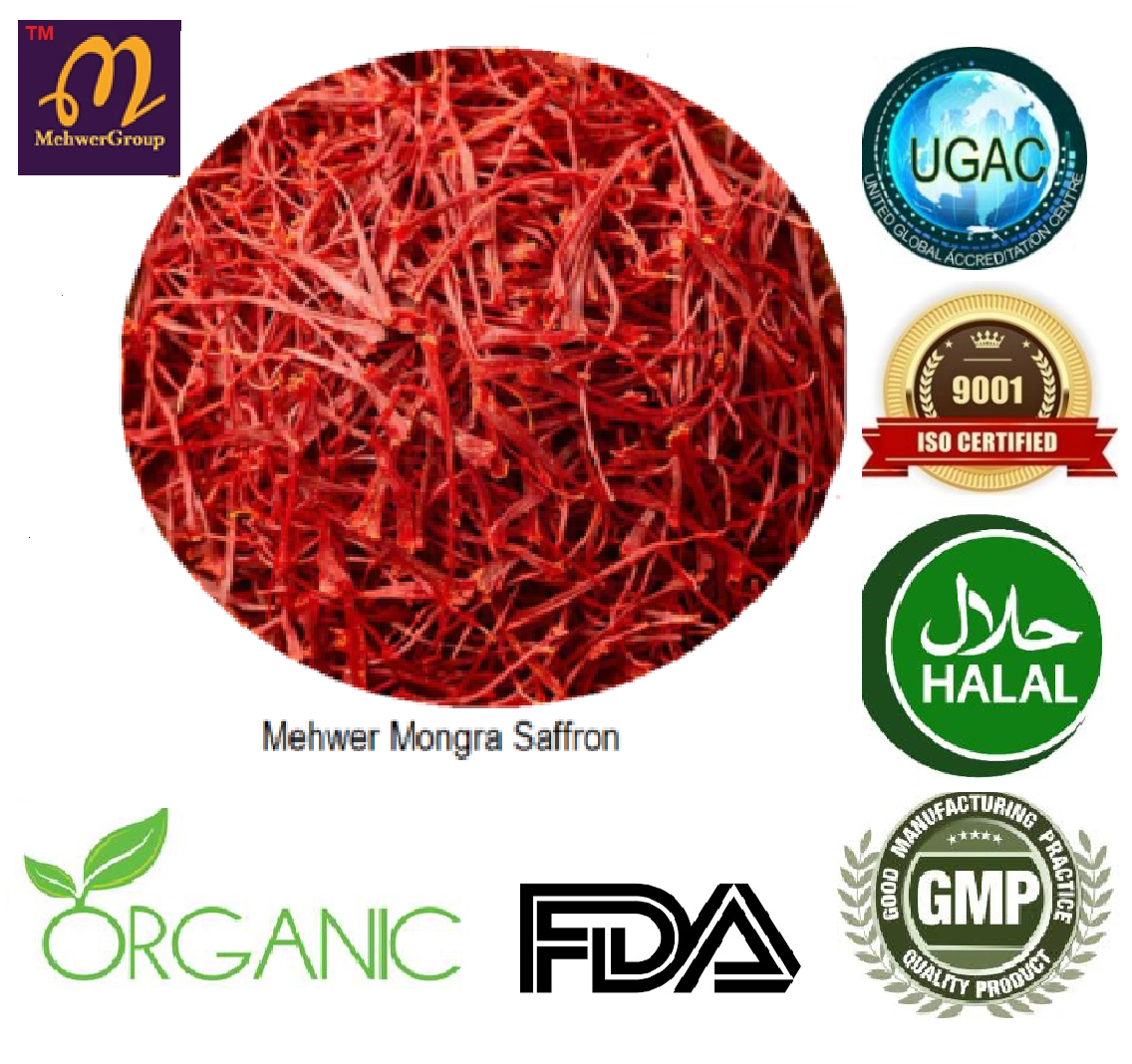
We are International ALEAF GREEN organic Saffron Company with SAFFRON TROUGH HI-TECH FREEZE DRYING. We take pride in being the best producer, processor and exporter of this precious commodity with the most up-to-date technology in India in order to achieve the highest possible standards of quality, purity and hygiene at all stages of production and processing (HACCP). We supply only number one quality Mongra (rashimi cut) saffron, without broken Stigma and style,
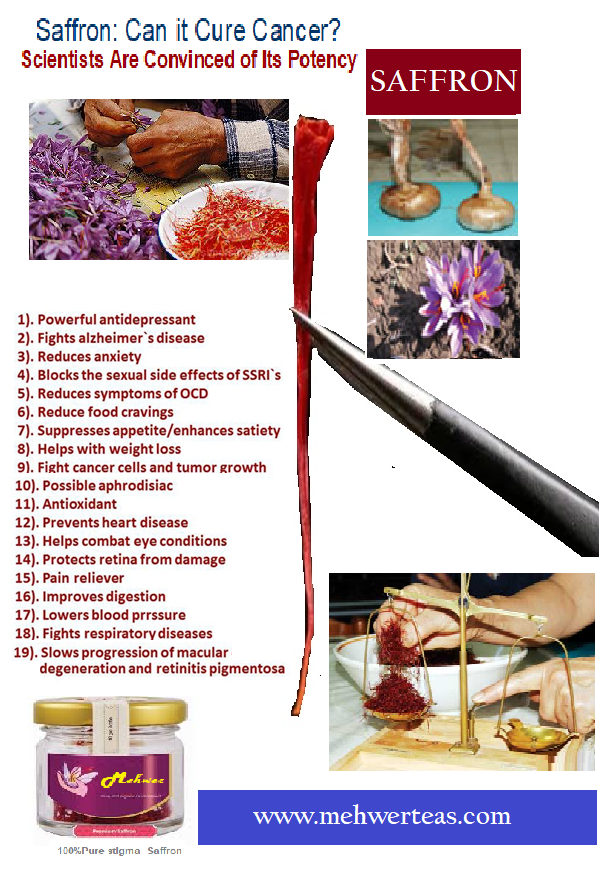
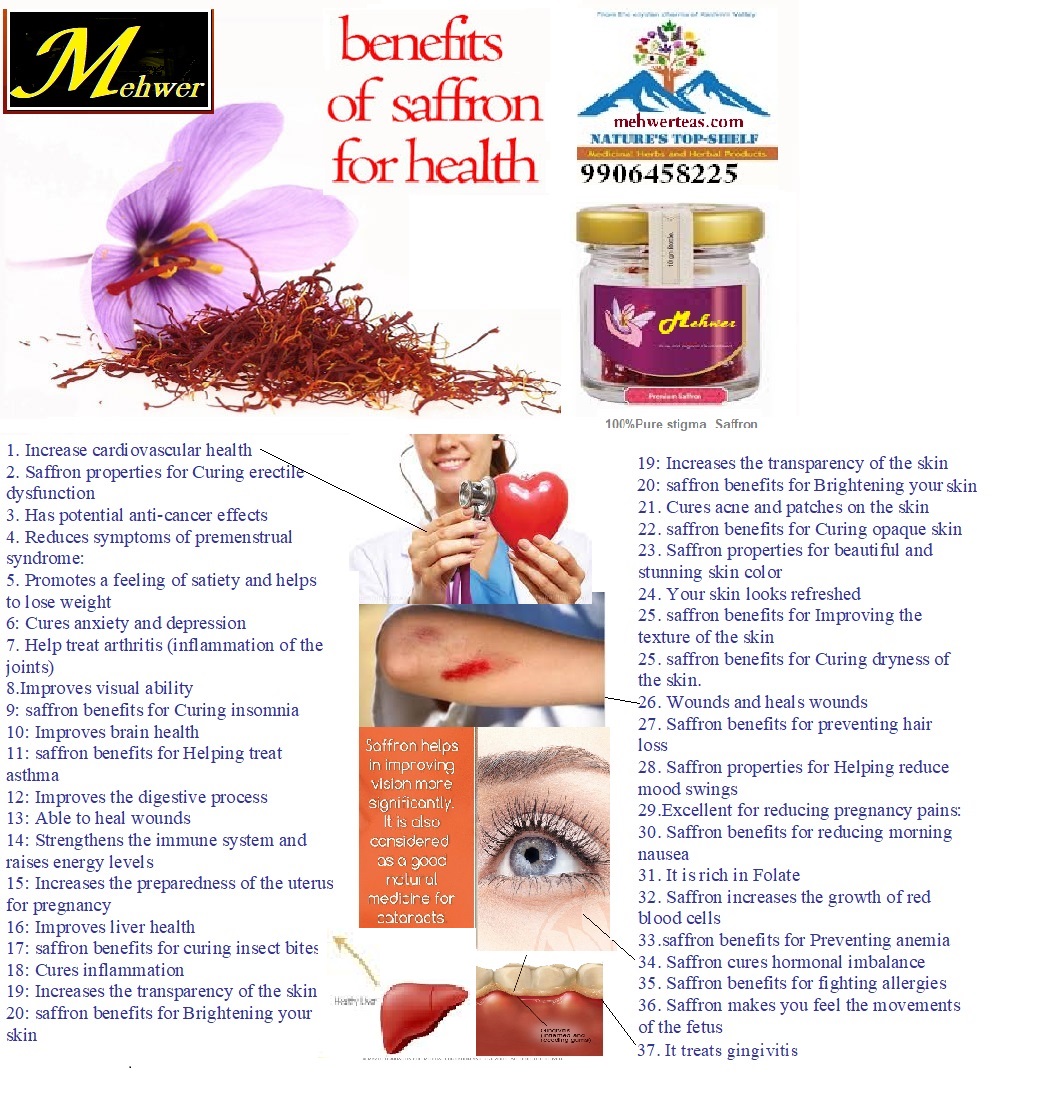
“Mehwer” Saffron Medicinal use
According to Ayurveda, saffron is said to be Tridoshara i.e. it is a destroyer of aggravation in all the three body humors viz. air, heat, phlegm.
• Brain Tonic – Saffron is believed to be a boon for the brain as well as the entire nervous system. You could add a pinch of the same to your milk, preferably at bed time. To release aroma, colour and flavour steep them in hot milk for at least 20 minutes. A grandmother’s recipe is to add cardamom and almonds to this hot milk. It also relieves tension and depression.
• Diuretic – Being diuretic, saffron tends to cause free passage of urine. It thus finds an important place in treating urinary disorders in which there is diminished flow of urine. At home you can soak it in water at night and the subsequent day take it mixed with honey or sugar.
• Uterine Healer – Saffron tends to cause neutral contractions of the uterus. A number of Ayurvedic preparations containing saffron have been successfully used in treating women ailments like amenorrhoea, dysmenorrhoea and uterine infections. Saffron is also believed to be quite useful in difficult labour and as a uterine purifier after the childbirth.
• Appetizer – It also aids in digestion by increasing the appetite. Saffron is also high in thiamin and riboflavin, minerals which are known to promote a healthy heart.
• Cooling Agent – Saffron is the main ingredient of Thandai, the drink to cool off when the sun gives out scorching heat. Thandai comprises of almonds, fennel seeds, rose water, black peppers and saffron ground together and blended with sugar and chilled milk.
• Regular usage of saffron is effective for Asthma and common colds.
• It works effectively against headaches, when applied as paste to the forehead.
• As a spice it is used internationally for colouring and flavour while giving a distinct aroma and a beautiful golden colour. Saffron pairs marvelously with rice(Zaafrani Pulao) and is an indispensable ingredient in many classical recipes. In India, dishes are decorated with saffron threads, as mark of honour to the guest. It is also used in Saffron Ice creams (Zaafran).
• Saffron is the key ingredient in the manufacture of favoured chewing tobacco (Zaafrani Zarda) mainly used in India.
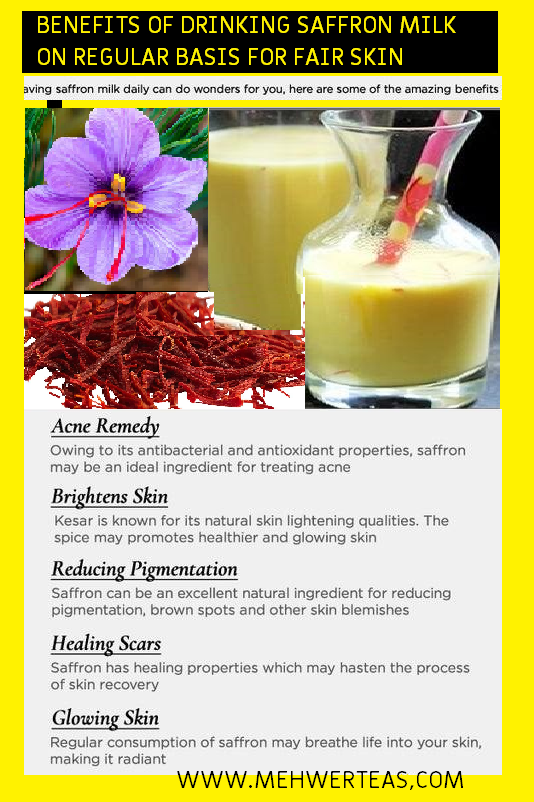
• Boon for the skin – Since olden times, saffron has been regarded as highly beneficial for skin. Not only does it add glow to the skin and cure blemishes, it also acts as a blood purifier. The oil of saffron called ‘Kumkumaadi tail’ is used in many fairness creams as the main constituent. Pregnant women are given saffron with milk, in the hope that their unborn infants would acquire a fair and glowing complexion.
As per Unani system of medicine, Saffron is considered as hot and dry. It is said to reduce inflammation. It is a stimulant and stomachic (one that tones the stomach. Considered a god remedy for enlargement of the liver and affection of the urinary bladderand kidneys, also in cholera. Mixed with other drugs, it is used to help in menstruation. It is strengthening to the heart and is refrigerant for the brain. If soaked overnight in water and administered with honey it makes the patient suffering from urine trouble to pass the urine freely. Pounded with ghee, it is used in diabetes.
Iranian used saffron to treat respiratory infections and disorders such as coughs and common colds, smallpox, cancer, hypoxia, and asthma. Other targets included blood disorders, insomnia, paralysis, heart diseases, flatulence, stomach upsets and disorders, gout, chronic uterine haemorrhage, dysmorrhea, amenorrhea, baby colic, and eye disorders.
For ancient Persians, saffron was also an aphrodisiac, a general-use antidote against poisoning, a digestive stimulant, and a tonic for dysentery and measles.
Our Saffron’s colouring power is mainly produced by crocin (chemical composition:
C44H64O24), which is one of the few naturally occurring carotenoids easily soluble in water.
This water solubility of our saffron is one of the reasons for its widely preferred application as a colorant in food and medicine.
In addition to crocin our saffron contains aglycon crocetin as a free agent and small amounts of the pigment anthocyanin. There are also oil soluble pigments including alphacarotene, beta-carotene and zegxantin. One of the most important parameters in evaluating the quality of saffron is its coloring power, which is determined by measuring by spectrophotometry the amount of coloring factors present at 443 nanometers.
Flavour
The principal element giving our organic saffron its special “bitter” flavour is the glycoside picrocrocin (C16 H26 O7). This bitter tasting substance can be crystallized and produces glucose and the aldehyde safranal by hydrolysis.
Aroma
Our saffron has a strong aroma which is produced by certain special volatile oils and essences. The main aroma factor in our saffron is safranal, which comprises about 60% of the volatile components of saffron. In fresh saffron this substance exists as stable picrocrocin but as a result of heat and the passage of time it decomposes releasing the volatile aldehyde safranal. safranal is a volatile liquid oil which produces a light yellow spot in water vapor and is readily soluble in ethanol, methanol and petroleum ether.

Reviews
There are no reviews yet.