


Description
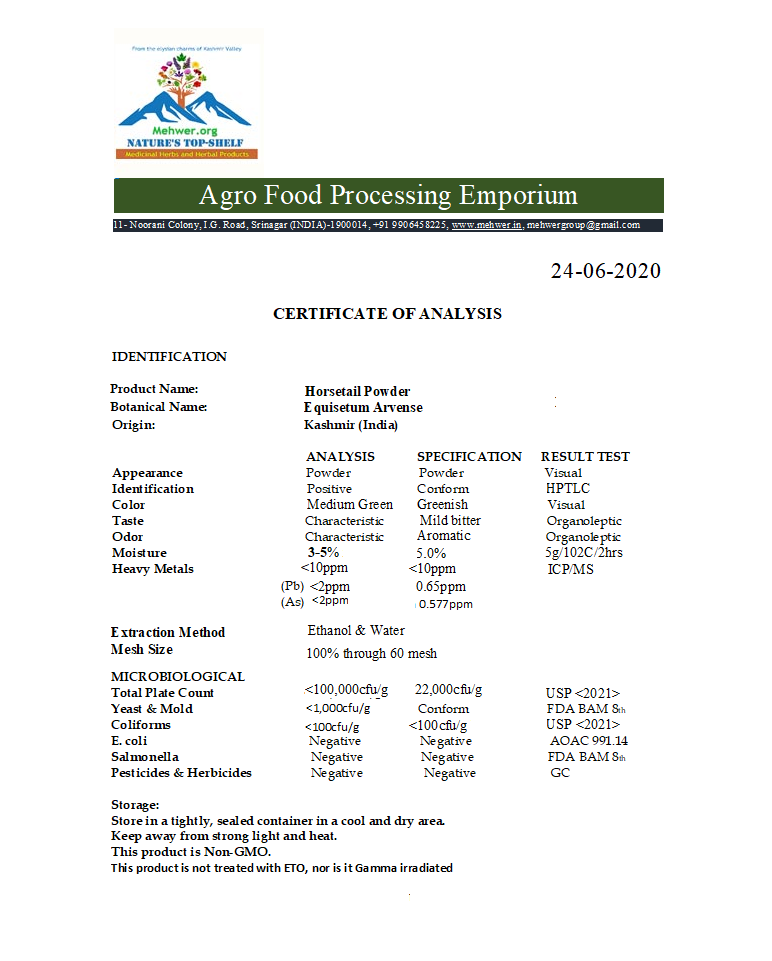
Botanical Name: Equisetum Arvense
Other Names :- Asprêle, Bottle Brush, Cavalinha, Coda Cavallina, Cola de Caballo, Common Horsetail, Corn Horsetail, Dutch Rushes, Equiseti Herba, Equisetum, Equisetum arvense, Equisetum hyemale, Equisetum telmateia, Field Horsetail, Herbe à Récurer, Horse Herb, Horsetail Grass, Horsetail Rush, Horse Willow, Paddock-Pipes, Pewterwort, Prele, Prêle, Prêle Commune, Prêle des Champs, Queue-de-Chat, Queue-de-Cheval, Queue-de-Rat, Queue-de-Renard, Scouring Rush, Souring Rush, Shave Grass, Shavegrass, Spring Horsetail, Toadpipe.
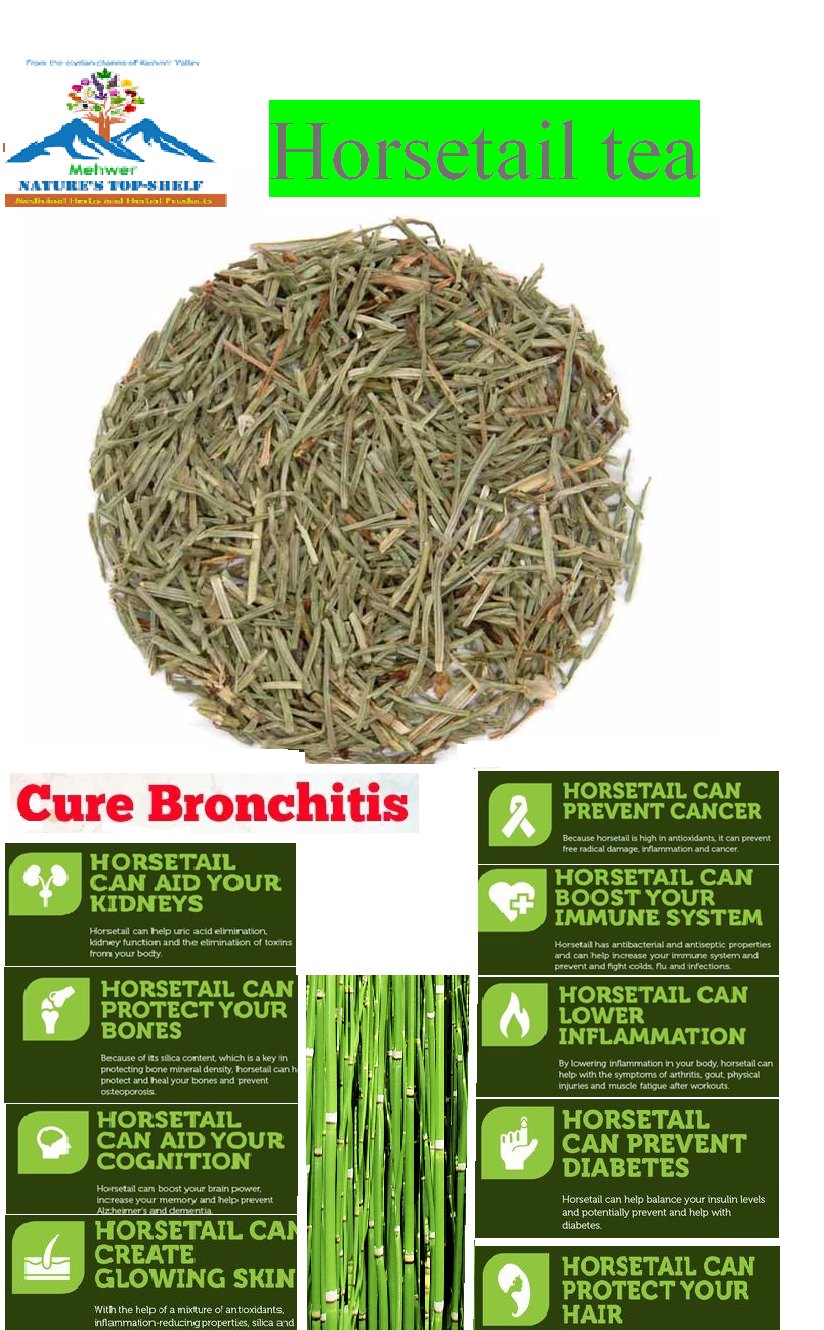
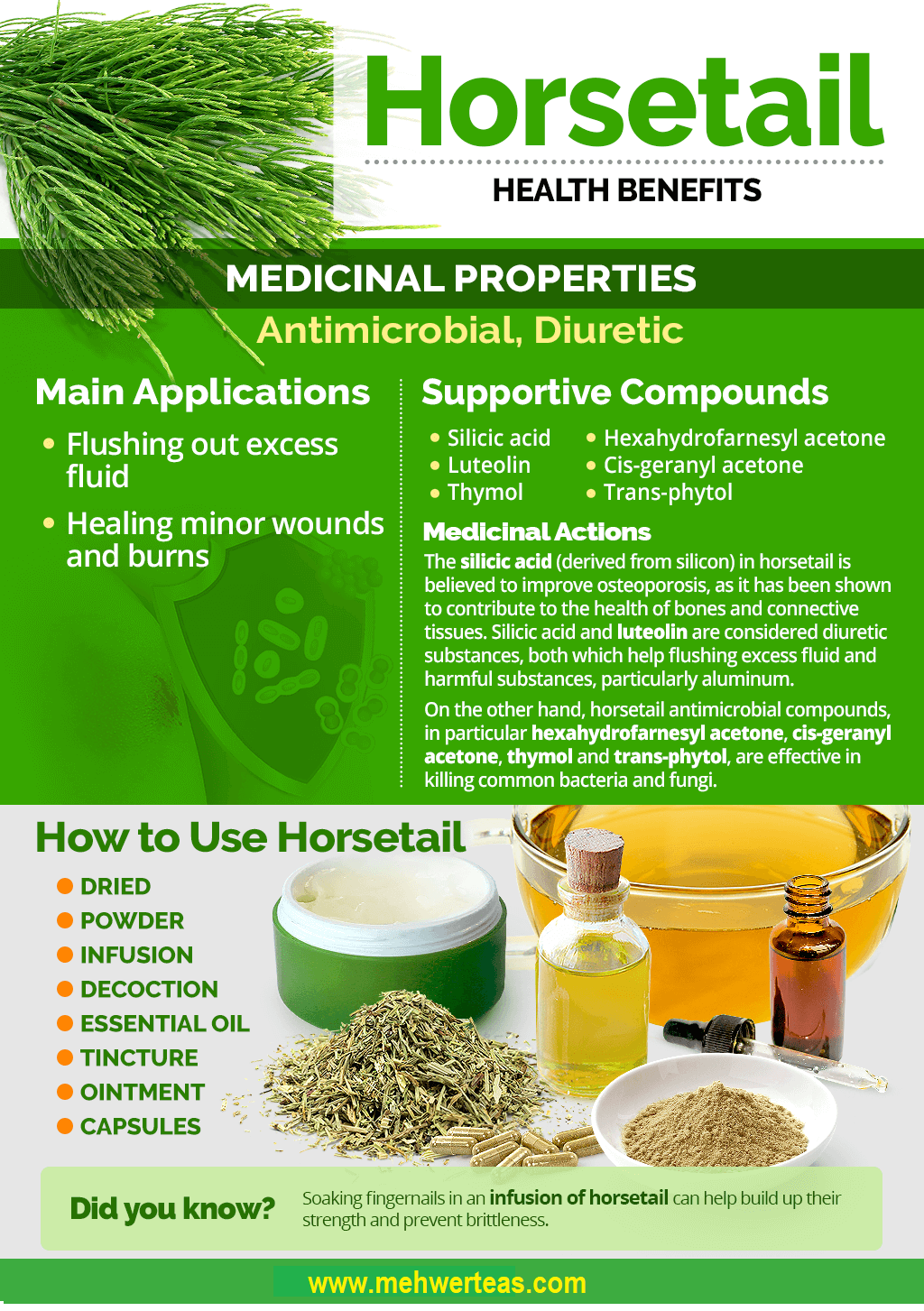
Horse Tail is used as a diuretic and astringent for inflammation of the genitor-urinary system. It is used for prostatitis, incontinence, cystitis and urethritis.
Horse Tail staunches bleeding of wounds, nosebleeds, coughing up of blood and heavy menstruation.
Horse Tail speeds up the repair of damaged connective tissue, improving strength and elasticity.
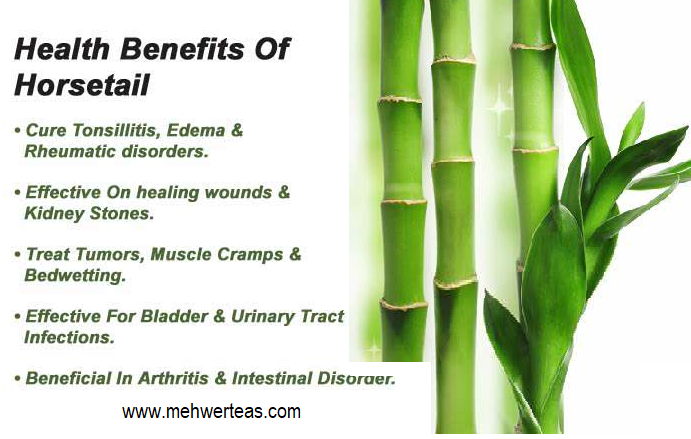
Horsetail is used for “fluid retention” (edema), kidney and bladder stones, urinary tract infections, the inability to control urination (incontinence), and general disturbances of the kidney and bladder.
It is also used for balding; tuberculosis; jaundice; hepatitis; brittle fingernails; joint diseases; gout; osteoarthritis; weak bones (osteoporosis); frostbite; weight loss; heavy menstrual periods; and uncontrolled bleeding (hemorrhage) of the nose, lung, or stomach.
Horsetail is applied directly to the skin to treat wounds and burns.
The chemicals in horsetail may have antioxidant and anti-inflammatory effects. Plants related to horsetail contain chemicals that work like “water pills” (diuretics) and increase urine output. But it isn’t clear whether horsetail has this effect. The other benefits of horsetail are
Horsetail is also recommended for anemia and general debility. It has also been used to treat deep-seated lung damage such as tuberculosis or emphysema.
Horsetail is an astringent herb and has a diuretic action. It has an affinity for the urinary tract where it can be used to sooth inflammation, haemorrhaging, cystic ulceration, ulcers, cystitis and to treat infections. It is considered a specific remedy in cases of inflammation or benign enlargement of the prostate gland and is also used to quicken the removal of kidney stones.
Its toning and astringent action make it of value in the treatment of incontinence and bed-wetting in children. It may be applied to such conditions as urethritis or cystitis with haematuria, reducing haemorrhage and healing wounds thanks to the high silica content. This local astringent and anti-haemorrhagic effect explains the application of horsetail to such conditions as bleeding from the mouth, nose and vagina, its use to check diarrhoea, dysentery and bleeding from the bowel, and for slow-healing wounds, chilblains and conjunctivitis.
The horsetail constitutes one of the most diuretic species in all the plants. That is to say that it possesses a great capacity to eliminate water from the body, in such a point to increase urination up to 30% more than what is habitual. This fact makes that its scientific name Equisetum arvense generally appears in the composition of most of products that habitually are sold to reduce weight. This property is due to the action of several components, among which it is necessary to highlight equisetonin and potassium, but there are another ones that also take part such as calcium, magnesium, ascorbic acid and caffeic acid.
Chemical Constituents: 3-Methoxy pyridine,
Aconitic acid, Articulatin, Ascorbic acid, Betacarotene, Beta-setosterol, Caffeic acid, Campesterol, Dihydrokaempferol, Dihydroquercetin, Equisetin, Equisetonin, Equisetroside, Flavonoids, Galuteolin, Gossypitrin, Herbacetrin, Iron, Isofucosterol, Isoquercetroside, Kaemferol, Luteolin,
Naringenin, Niacin, Oxalic-acid, p-Coumaric acid, p-Hydroxy-benzoic acid, Palustine, Palustinine, Phenolic acid, Quercitrin, Rhodoxanthin,
Riboflavin, Selenium, Sterols, Thiamin, Vanillic acid, Vitamin C, Zinc , Activities: Anti-fungal, Anti-rheumatic, Anti-viral, Diuretic, Hemopoietic, Haemostatic
2003).
As a diuretic it is particularly suited to metabolic or hormonal oedema during the menopause. The diuretic action is thought to be due partly to the flavonoids and saponins. Equisetum is restorative to damaged pulmonary tissue after pulmonary tuberculosis and other lung disease, as the silicic acid is said to stabilise the scar tissue.
It may be taken internally to stop bleeding from ulcers or curb heavy menstrual bleeding. It may also be used as a gargle and mouth rinse for sore throat and bleeding gums or mouth ulcers. Externally it is a vulnerary and may also be applied as a compress to fractures and sprains, wounds, sores, skin problems and a gargle for mouth and gum inflammations.
It has been established that administration of silicic acid causes leucocytosis (a temporary increase in white blood cells). Equisetum’s silica content encourages the absorption and use of calcium by the body and also helps to guard against fatty deposits in the arteries. Its influence on lipid metabolism leads to potential benefit for cardiovascular problems.
Recent research in Russia has apparently demonstrated that horsetail is effective in removing lead accumulations in the body.
Horsetail tea has been studied and analyzed for a long time. Known by various names such as equisetum arvense, scouring rush, shavegrass, and field horsetail, the horsetail plant and herb are known diuretics. The horsetail likewise has been known as a sedative and anti-convulsant. So prized is horsetail in the days of old that it has become known to be “irreplaceably priceless”.
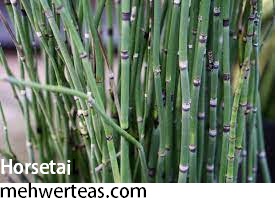
The horsetail is a perennial plant that has dark green hollow, joined or segmented stems with no leaves. The horsetail can usually be found in wet areas and has a large amount of silicon crystals (or sand) in its tissue. The sand content in horsetail is the most abundant of any plant, and it is commonly used to polish tin ware.
Aside from silicates, horsetail is likewise abundant in potassium, aluminum, and manganese, as well as a variety of flavonoids.
The above-ground parts of the plant are used for herbal and healing purposes. However, avoidance of horsetail is recommended for those with kidney stones and congestive heart failure and those taking an ACE inhibitor for high blood pressure. Pregnant women should also avoid using horsetail tea. horsetail is also used in
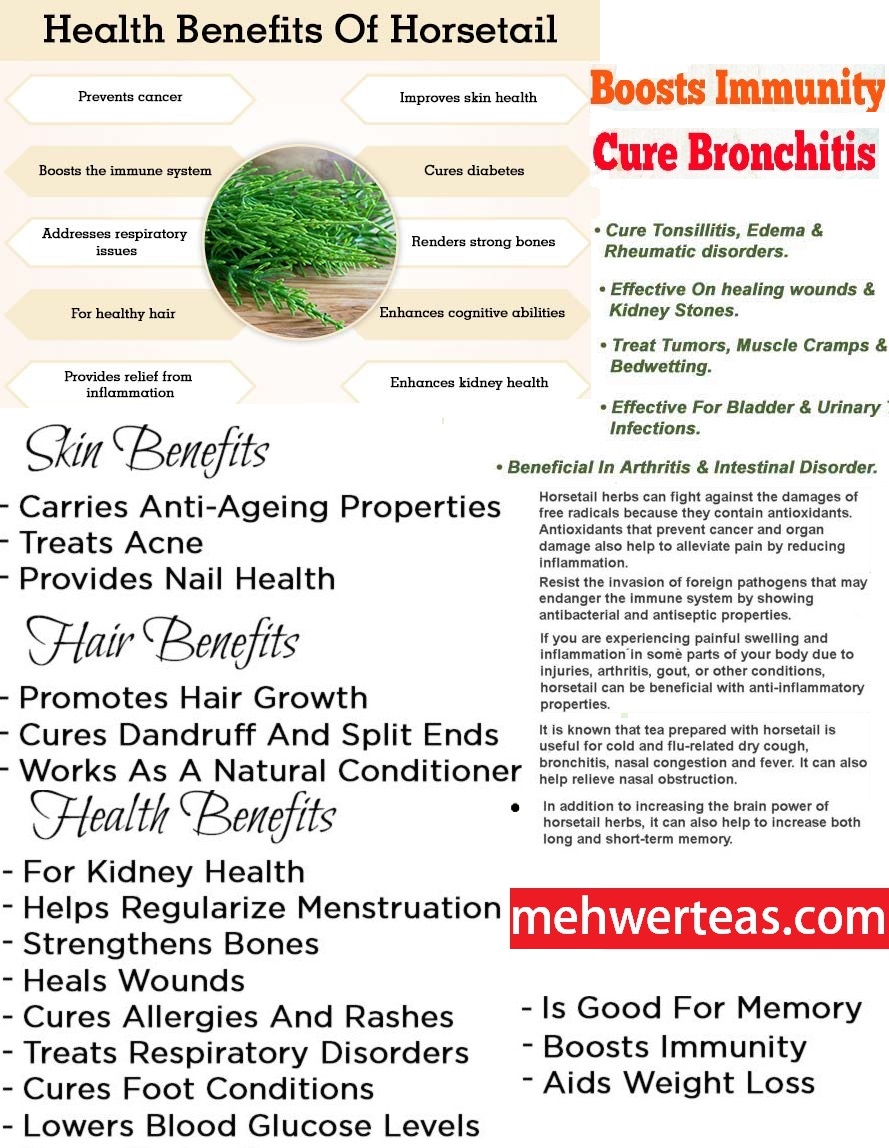
• Osteoporosis.
• Kidney and bladder stones.
• Weight loss.
• Hair loss.
• Gout.
• Frostbite.
• Heavy periods.
• Fluid retention.
• Urinary tract infections.
• Incontinence.
• Use on the skin for wound healing.
• Other conditions.
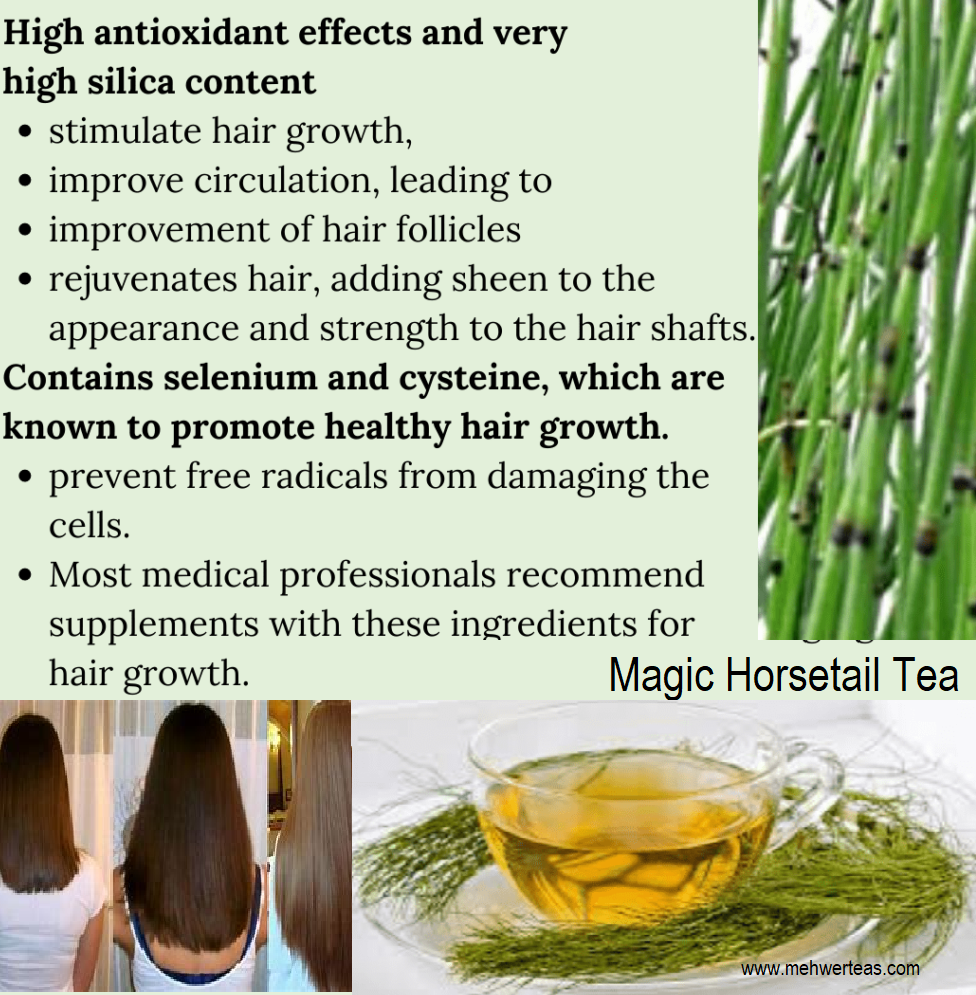
• Hair & Nails
• Diabetes
• Liver Health
• Herpes
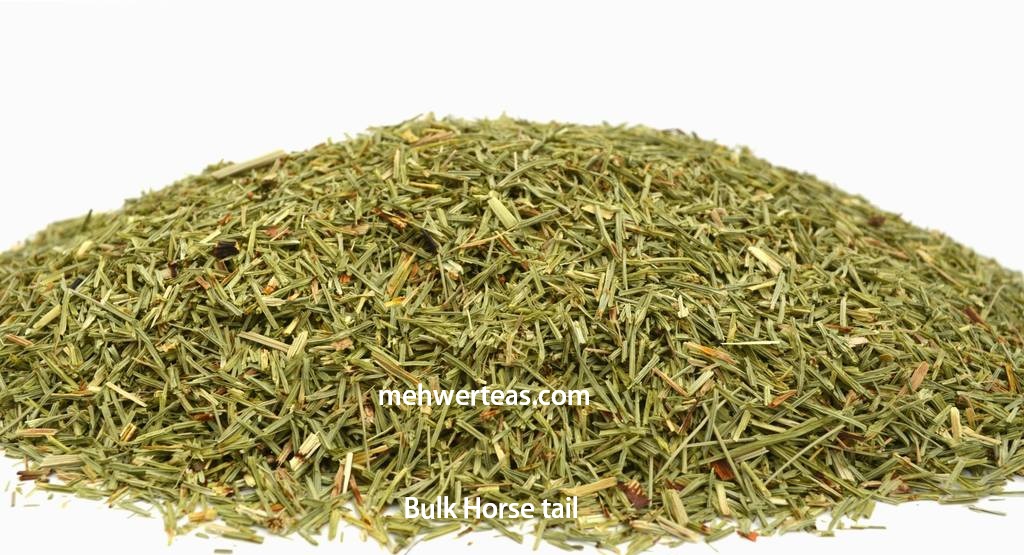
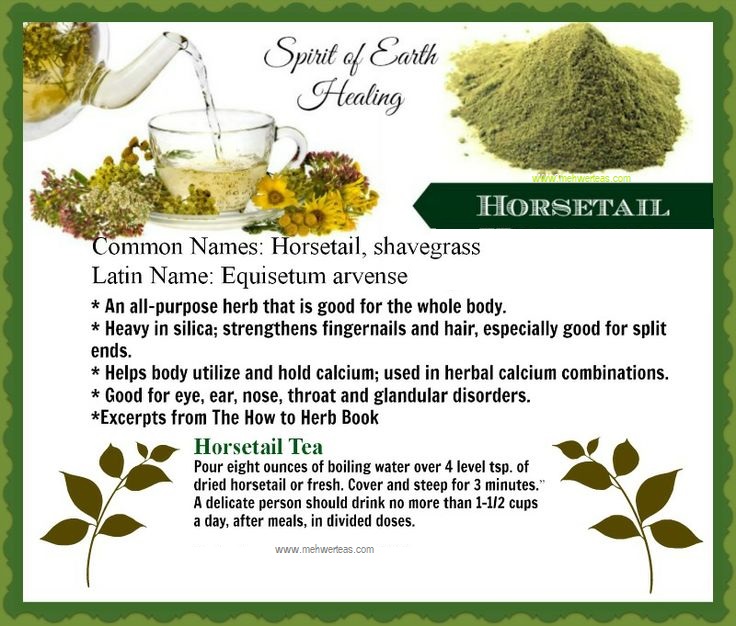
Horsetail tea is usually made to derive the healing properties of the plant. The tea is prepared by pouring boiled water over 2 to 3 grams of horsetail herb, boiling for five minutes, and then straining after 10 to 15 minutes. It is recommended that this be drank during the day between meals.
The following health benefits have been attributed to the tea:
• Helps to increase urinary flow and thus help flush bacteria from the bladder.
• May help strengthen bones and cartilage, and thus may be helpful in the fight against arthritis and osteoporosis.
• The tea or tincture (Extract) form may be used to treat wounds and burns.
• May be gargled to fight mouth sores and other oral wounds.
• May help treat disorders in the digestive system like hyperacidity and ulcer.
• May be used in the head to eliminate dandruff.
• May help stimulate blood flow.


Reviews
There are no reviews yet.