




Description
Botanical Name: Calendula officinalis
Calendula Flower Whole is applied to the skin to reduce pain and swelling (inflammation) and to treat poorly healing wounds and leg ulcers. It is also applied to the skin (used topically) for nosebleeds, varicose veins, hemorrhoids, inflammation of the rectum (proctitis), and inflammation of the lining of the eyelid (conjunctivitis).
It is thought that the chemicals in calendula help new tissue grow in wounds and decrease swelling in the mouth and throat. Muscle spasms
Fever, Nose bleeds, Treating mouth and throat soreness, Wounds, leg ulcers
Cornflower tea has long been noted by practitioners of herbal medicine for ages. It is known as an herb with substantial astringent and antiseptic properties. In the olden days, the leaves or seeds of the cornflower were steeped in wine and taken as a cure for pestilential fevers.
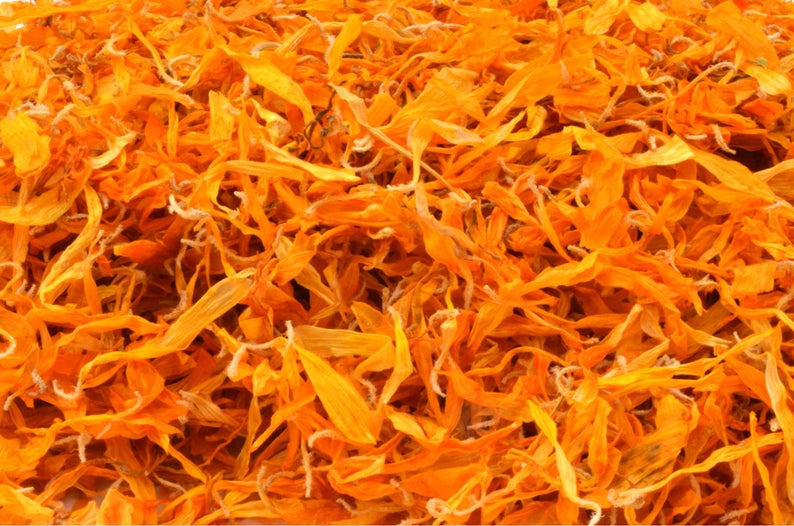
The flower petals from calendula can be used to add colour to salads, rice dishes, soups, stir fries, stews, biscuits and desserts. You can also use fresh leaves in salads.
An infusion or tincture of the petals taken internally will help with inflammatory problems in the digestive system, such as peptic ulcers, colitis and gastritis.
Calendula is cleansing for the liver and gall bladder and can be helpful for jaundice, hepatitis and liver congestion. Externally it is commonly used in ointments, cream and lotions for dry inflamed skin, cuts, abrasions, eczema, acne, fungal infections, burns, nappy rash and conjunctivitis.
Use in creams and lotions for sensitive skin, as a hair rinse to bring out gold highlights and as an eyebath for itchy tired eyes.
Actions
The health benefits of Calendula tea have been known especially to American health practitioners, applying the herb to treat bruises, cuts and minor skin infections.
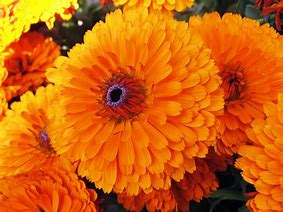
Also called ‘marigold’, the calendula is an orange or yellow-colored flower typically found in northern Mediterranean countries. Calendula has a tendency to bloom once a month or every new moon. Calendulas, or marigolds, are often used in Roman Catholic events honoring the Virgin Mary.
The calendula is typically used in households as flavoring and coloring agent for such foods as cereals, rice, and soups.
Calendula Tea BenefitsCalendula has the following components: calendulin, beta-carotene, other carotenoids, isoquercitrin, narcissin, rutin, amyrin, lupeol, sterols, and volatile oils. The calendula flowers also contain complex polysaccharides with immunostimulant properties.
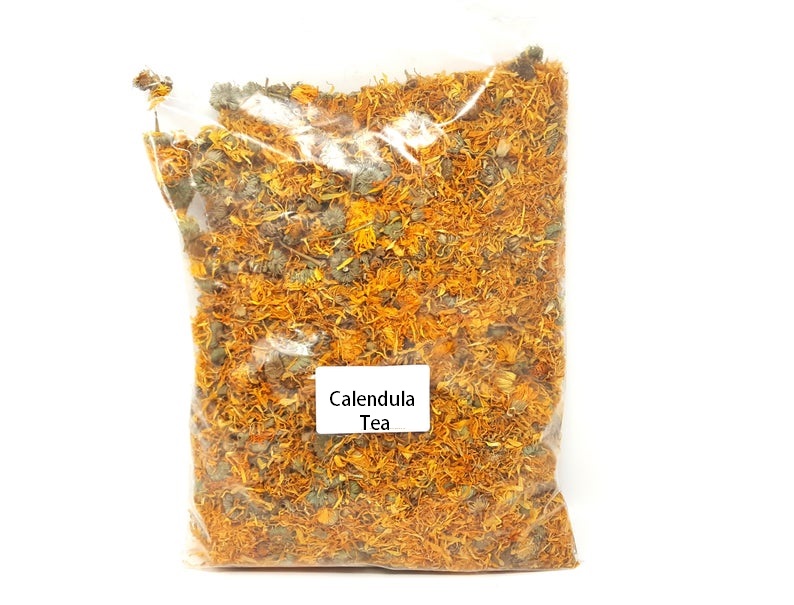
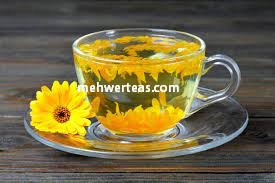
Calendula Tea is made by steeping dried calendula flowers in boiling water for about 5 minutes.
Some of the health benefits attributed to calendula tea are the following:
Thought to be anti-inflammation and anti-bacterial.
Its also thought to be an immuno-stimulant.
May be helpful in ear infections.
Its tea or washes may help in treatment of conjunctivitis.
May help stimulate the production of collagen.
May be gargled to help relieve sore throat and inflammations of the mouth.
May help detoxify the body after an operation.
May be beneficial to those suffering from gastrointestinal disorders. Calendula may protect the stomach and intestine linings of the stomach and intestines by inhibiting the prostaglandin E1 (PGE). Calendula Tea also may help limit the effects the bacteria associated with gastritis, peptic ulcers, and stomach cancer.
May help regulate the menstruation cycle.
This tea can be stored in the refrigerator and be used as a soothing skin treatment. It can be swabbed directly on inflamed skin (acne, hemorrhoids, etc.)

Reviews
There are no reviews yet.