





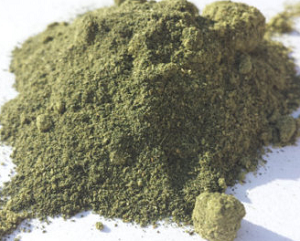

Description
Stinging nettle is most famous for the stinging hairs that will raise welts on the skin of those unlucky enough to touch them while walking through the woods or fields. The stinging hairs penetrate the skin with histamine and formic acid, which irritates the skin.
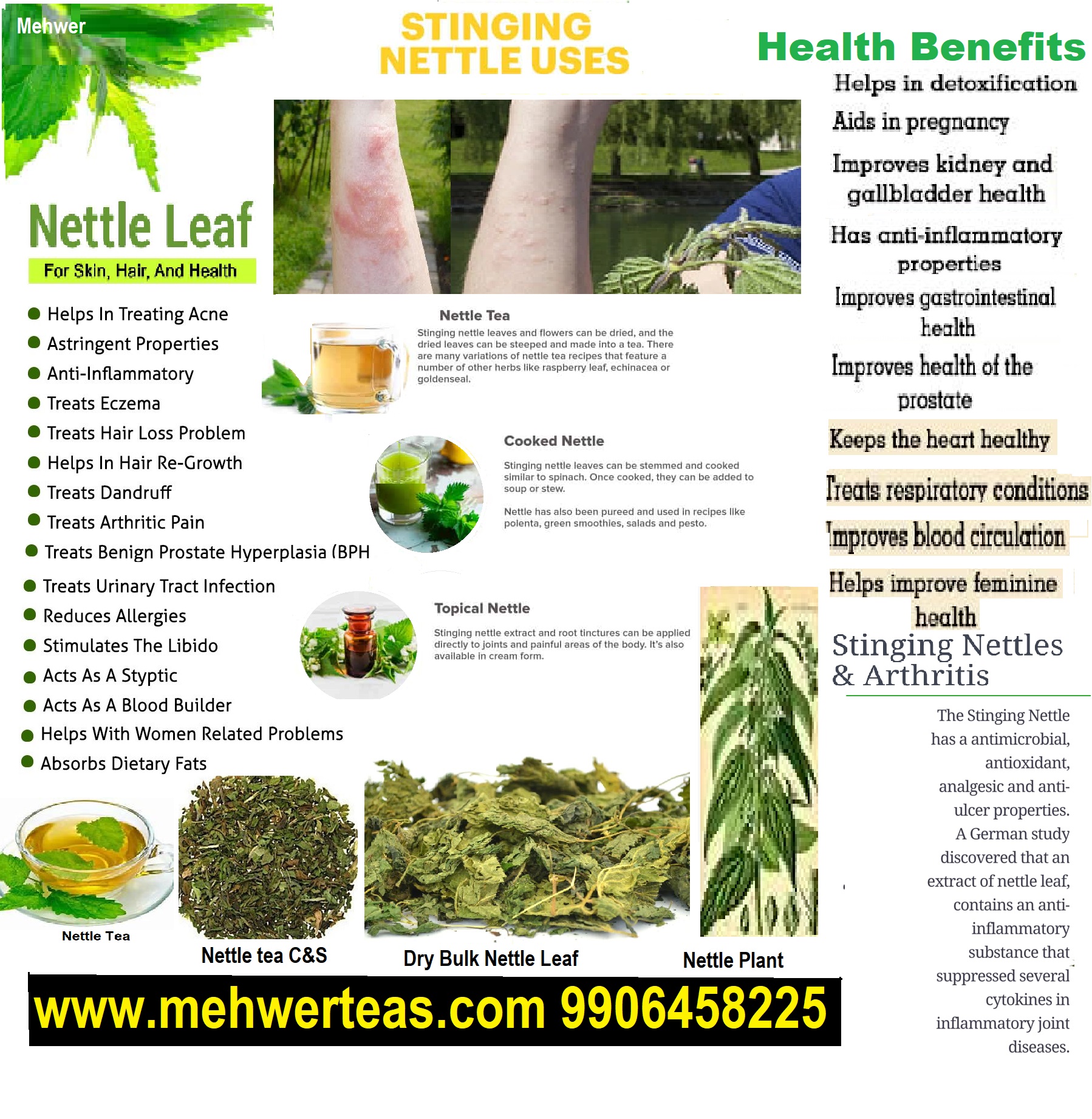
Medicinal Uses – Internally, Nettle herbal tea is nutritious and full of iron. It is helpful during pregnancy in maintaining iron at a healthy level. It is also a galactogogue (a substance that increases milk production), and is therefore useful where this is a problem, either in animals or humans. The juice can be taken as a diuretic for congestive heart failure patients. Extracts can be used for arthritis, hay fever, anemia, kidney problems and pain. Externally, Urtication (flogging with nettles) is a process of deliberately stinging the skin with to create redness. This is done to provide pain relief from rheumatism. Fresh nettle can stop bleeding when it is applied to a fresh wound. The herb contains a lot of vitamin K, which aids clotting.
Other Uses – Tops are nutritious and can be cooked like spinach or put in soups. New growth can be safely picked and eaten fresh in salads. Stems can be used to make specialty paper. It can also be raised for fiber or dye.
Herbs to Combine/Supplement – Dried nettle can be combined with red raspberry leaf, oatstraw and alfalfa to make a nutritious herbal tea during pregnancy.
Parts Used -The aerial portion of the plant is used for most applications.
Active Constituents – Nettle is a good source of vitamins A, C and E as well as B1, B2, B3 and B5. It is also rich in protein, calcium, iron, folate, potassium, magnesium, manganese, phosphorous, selenium and zinc. It also contains alpha and beta hydroxysitosterols, appreciable amounts of quercetin and rutin.
The following are some more well-known health benefits of this brew:
Helps in fighting coughs, tuberculosis and asthma.
Counters arthritis, rheumatism, tendonitis and other disorders of the muscles and joints.
Combats a variety of intestinal disorders.
May help in alleviating skin problems.
May aid in the treatment of allergies like eczema, and hay fever.
Often used to treat urinary tract infections.
Precautions – Stinging nettle is considered safe for most people, although you should be careful to use it only as directed. Some people may experience some mild stomach upset, fluid retention or hives if they take too much.
Preparation and Dosage – For topical creams, use as directed on the label.
For tincture, 5 to 7.5 ml 3 to 4 times per day is sufficient.
For leaf extract, 2 to 5 ml 3 times per day is usually enough.
For root extract, take 1.5 ml 3 to 4 times per day.
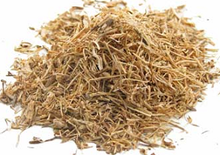
For dried nettle leaf, 2 to 4 grams three times a day is the usual dose.
For herbal tea, use 3 to 4 teaspoons of dried leaf in 2/3 cup of boiling water and steep for 3 to 5 minutes. Drink 3 or 4 cups per day. Make sure you drink extra water along with the herbal tea.
The following are some more well-known health benefits of this brew:
Some interesting facts about Nettle tea, did you know that:
Nettle tea is a rich source of potassium. This mineral plays an important role in conducting electricity in the body. Since the major organs of the body like the brain and heart cannot function without electricity, the role of electrolytes like potassium cannot be ignored. Read here to know more about Potassium.
Nettle tea is also a rich source of calcium. This mineral is vital to the maintenance and development of bones in the body. Inadequate intake of calcium may contribute to accelerated bone loss and the development of osteoporosis. Get more information on Calcium here.
Nettle tea has high levels of beta-carotene. A precursor of Vitamin A, beta-carotene contributes to the maintenance of good vision and protection from such eye diseases such as night blindness and cataract. Read more on Beta-carotene here.
Nettle tea is said to be helpful in the treatment of asthma. The plant’s seeming ability to fight allergic infections is what makes it a good ally against asthma. Go here for more info on other teas for asthma.
Nettle leaves are said to contain about 16 types of amino acids. Amino acids are the building blocks of protein and the abundance of these amino acids in the plant contribute to nettle’s high protein content. Studies have shown that nettle’s protein content may be as high as 25% (dry weight) which is quite high for a leafy green vegetable.
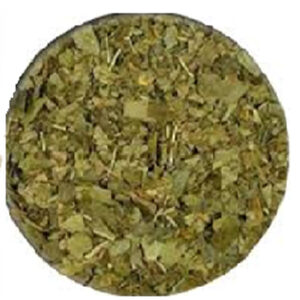

Reviews
There are no reviews yet.